How much does a 13kWh home battery cost installed in NSW in 2026?
Short Answer · Updated Nov 2026
As of November 2026, a 13kWh home battery installed in NSW averages $11,850 after rebates (typical range $10,400–$13,600), down from a pre-rebate average of $14,600 ($910/kWh net). For an Ausgrid or Endeavour Energy household on a time-of-use tariff, realistic payback sits between 6.4 and 7.8 years.
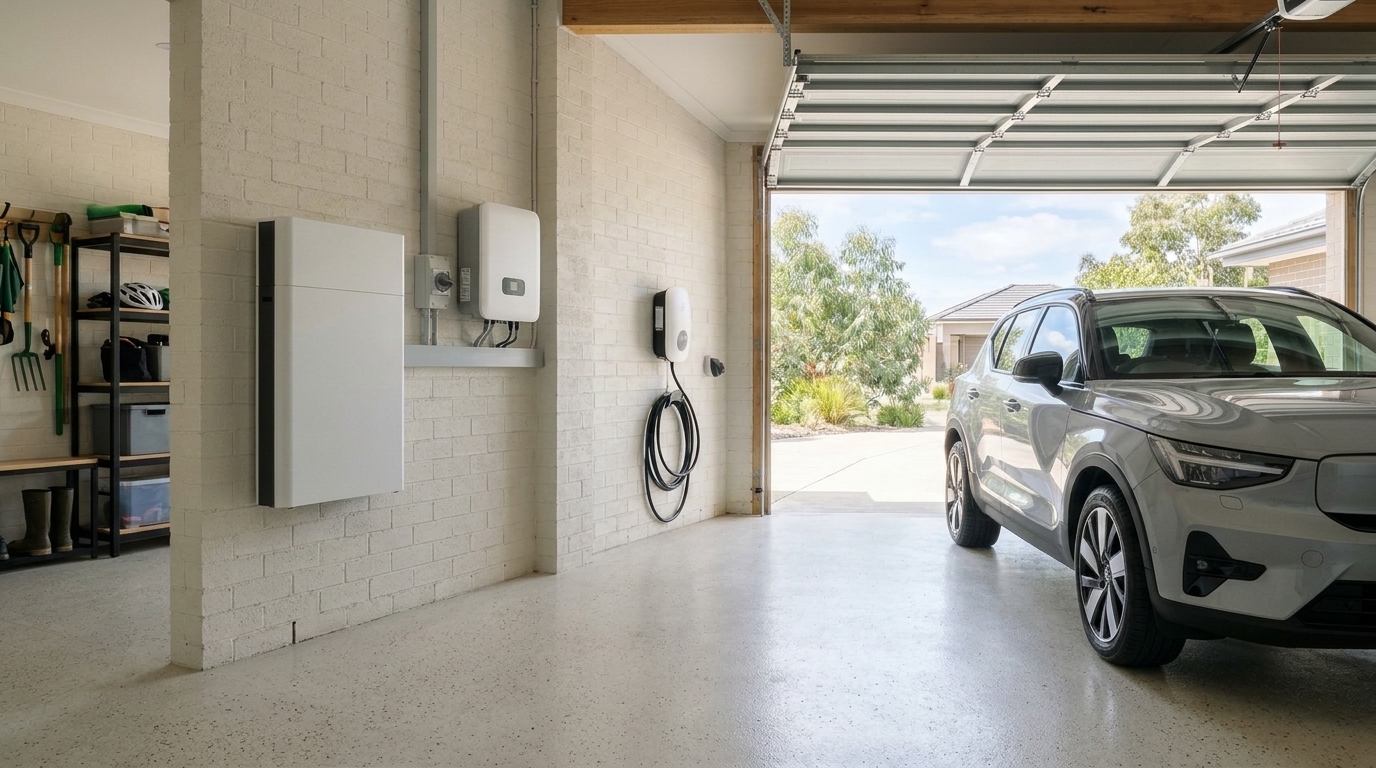
NSW Installed Home Battery Prices by Usable Capacity (Nov 2026)
| Usable Capacity | Pre-Rebate Avg | Post-Rebate Avg | Net $/kWh | Quote Sample |
|---|---|---|---|---|
| 9.6 – 10.2 kWh | $11,900 | $9,650 | $965 /kWh | 410 quotes |
| 12.8 – 13.5 kWh | $14,600 | $11,850 | $910 /kWh | 680 quotes |
| 19.2 – 20.0 kWh | $19,800 | $16,200 | $830 /kWh | 235 quotes |
| 25.6+ kWh | $24,900 | $20,400 | $795 /kWh | 95 quotes |
What drives a $3,000 price spread between NSW quotes for the same battery?
Hardware accounts for roughly 65% of a battery quote, but Australian Standard AS/NZS 5139 compliance drives the remaining variance. Bollards inside garages, fire-rated cement sheeting behind habitable walls, and main switchboard upgrades routinely add $900 to $2,400.
Quotes that appear unusually cheap often exclude backup circuits entirely (grid-tied discharge only) or omit a dedicated sub-board for essential loads.
How federal Cheaper Home Batteries and NSW PDRS rebates stack
Eligible NSW households can combine the federal Cheaper Home Batteries discount with NSW Peak Demand Reduction Scheme (PDRS) VPP incentives, provided the battery is on the CEC approved list and installed by an accredited provider.
Always check the 'Last Verified' date on rebate tables: certificate prices (PRCs) fluctuate weekly and accredited certificate providers deduct administrative fees of 10%–18%.
Next Step
Check local pricing and compatibility for your postcode
Compare up to 3 itemised quotes from CEC-accredited installers, with switchboard and CT-meter costs broken out upfront.
Frequently asked questions
Is a 13kWh battery big enough for a 4-bedroom Sydney home?
For homes consuming 18–25 kWh per day without overnight EV charging, 13kWh typically covers 80%–90% of evening and morning peak usage.
Do I need a new inverter to add a battery to existing solar?
Not necessarily. AC-coupled batteries like Tesla Powerwall 3 or Enphase IQ Battery 5P can retrofit alongside almost any existing string inverter, though DC-coupled hybrid upgrades can be more efficient if your inverter is over 7 years old.